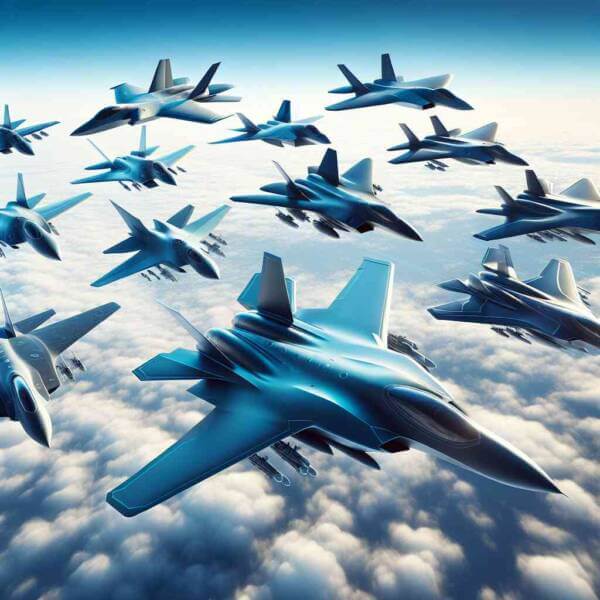
Since its beginnings in the early 20th century, military aviation has become a key component of military power.
Today, military aviation encompasses a wide range of technologies, from fighter jets and bombers to surveillance drones and transport planes.
The Evolution of Military Aviation
As technology advanced, airplanes were adapted for offensive operations, reshaping military strategies.
Important events in the evolution of military aviation:
- Development of air combat tactics
- Massive growth in air power
- Rapid development of jet technology
- Remote operations changing the face of conflict
Each era brought more powerful aircraft that redefined military capabilities.
Types of Military Aircraft
Military aviation includes a variety of aircraft, each designed for specific missions.
Common categories of military aircraft are:
- Planes built for speed and agility
- Aircraft for long-range attacks
- Transport aircraft
- Eyes in the sky for modern armies
Each type plays a key part in military operations, from striking enemy targets.
Importance of Air Superiority
Air superiority is vital for achieving military success.
Benefits of air superiority include:
- Reducing enemy effectiveness
- Targeting infrastructure and logistics
- Gathering critical intelligence
- Psychological impact on enemy forces
Nations with strong military aviation capabilities can shape outcomes.
Technological Innovations in Military Aviation
Military aviation is at the forefront of scientific progress.
Future technologies in military aviation:
- Stealth technology
- Ultra-fast strike capabilities
- Autonomous drones
- New forms of aerial weaponry
These advancements increase survivability for air forces worldwide.
Risks and Limitations
From high costs to geopolitical tensions, the road to air dominance is a constant battle.
Key challenges include:
- Expensive research and operations
- Short life cycles for cutting-edge aircraft
- Protecting systems from hacking and sabotage
- New debates about AI in warfare
Addressing these challenges is essential for maintaining air power.
Where Military Aviation is Heading
Nations will continue investing in next-generation aircraft to maintain strategic advantages.
Expected advancements:
- Autonomous mission planning
- Space as the next battlefield
- Developing sustainable aviation technology
- Collaborations across allied air forces
The next era of military aviation will redefine defense.
Conclusion
Its history, present achievements, and future possibilities demonstrate strategic importance.
As technology continues to evolve, the skies visit will remain a critical arena where military aviation protects nations.
The future of military aviation is full of potential — and it’s only just beginning.